Family Learning Adventures Membership

 Family Learning Adventures

Your Child Can Scroll TikTok for Hours. But Reading a Chapter? Tears and Meltdowns.

Whether they struggle with decoding words, understanding what they read, or both - in a distracted world, your ADHD/dyslexic learner needs more than tutoring. They need strategic practice that retrains screen-damaged reading habits, builds systematic thinking skills, and prepares them for middle school text complexity AND an AI-driven future.

Lock in Founder Pricing: $19.99/month (First 50 Families Only)

You're a parent who sees something the "experts" are missing. Your child is bright.
Creative. Full of potential. But when it comes to reading? Something isn't clicking.

Nothing seems to work for YOUR child.

Maybe they:

  • Can decode the words but have NO idea what they just read ("I don't know" to every comprehension question) 
  • Struggle to sound out words AND don't comprehend (double-whammy) 
  • Read SO slowly they lose the thread of meaning 
  • Skip words, guess at words, or make up what they think it says 
  • Race through text to LOOK competent but comprehend nothing 

Whatever the specific struggle looks like, one thing is clear:

It's getting worse, not better:


  • Homework that should take 20 minutes takes over an hour (with tears) 
  • Reading assignments = instant resistance ("This is boring!" "I hate reading!") 
  • Comprehension questions = meltdowns ("I don't get it!") 
  • You're watching the gap widen every day 

You've tried:


  • Rewards and consequences (short-term compliance, zero lasting change) 
  • "Just focus harder" conversations (made things worse) 
  • Reading together every night (still struggling with school assignments) 
  • Googling strategies at 9pm (overwhelmed by conflicting advice) 

And you're asking yourself:


  • Do I need a tutor? ($200-400/month I can't really afford long-term)
  •  Is something wrong with my child's brain? 
  • Can I help at home or do they need professional intervention? 
  • Will they be ready for middle school at this rate? 
  • What about standardized tests? 
  • How do I even KNOW what the real problem is? 

You're stuck between two fears:


1. Doing nothing (watching them fall further behind) 

2. Doing the wrong thing (wasting time and money on solutions that don't address the root cause)

You don't need another person telling you "they just need to try harder."

You need CLARITY about where the breakdown is. And SYSTEMS that actually work for your child's neurodivergent brain.

Screen Time Rewired How Kids Read

Here's what nobody's telling you:

Screen time hasn't just shortened attention spans.

It's rewired HOW an entire generation reads. Screen-trained reading looks like: 

  • Scan for keywords → Jump to anything colorful → Click to the next thing in 30 seconds 
  • Get dopamine hit from novelty, not comprehension 
  • Never go deeper than the headline 

This works GREAT for:

  • TikTok (scroll, scroll, scroll) 
  • YouTube (next video, next video) 
  • Instagram (swipe, swipe, swipe) 

This FAILS CATASTROPHICALLY for:

  • Textbooks (dense paragraphs, no visuals, building concepts) 
  • Test passages (complex ideas across multiple pages) 
  • Middle school assignments (synthesis and inference required) 

And here's the cruel irony:

Most state tests are now DIGITAL.

So your child has to: 

  • Read complex passages ON A SCREEN (triggering their scroll habits) 
  • Answer deep comprehension questions (requiring systematic thinking) 
  • Under time pressure (while fighting the urge to skim) 

The text complexity is also jumping:

Grades K-2: Short sentences, lots of pictures, simple plots

Grades 3-5: Multi-paragraph chapters, abstract concepts, ideas building across pages

Grades 6-8: Multiple texts to synthesize, historical documents, scientific processes

High school: Most have given up entirely

The gap gets wider every year. And by middle school? It's MUCH harder to fix.

You Feel Like You're Failing Them

Every night, you watch your bright, creative, capable child struggle with something that "should" be easy.
 
And you feel:

  • Guilty ("Am I not doing enough? Should I quit my job to homeschool?") 
  • Frustrated ("We've been working on this for MONTHS - why isn't it clicking?") 
  • Alone ("Other parents don't seem to deal with this. What am I doing wrong?") 
  • Worried ("If they can't handle 4th grade reading, how will they survive middle school?") 
  • Overwhelmed ("Do I need a tutor? A therapist? An evaluation? All of the above?")

The homework battles are destroying your relationship.

You used to enjoy reading together. Now reading time = tears, resistance, meltdowns.
You're becoming the "homework police" instead of the parent who nurtures their dreams.
 
And the worst part?

The "normal world" keeps telling you: 

  • "They just need to focus better" (they're TRYING to focus!) 
  • "Cut screen time" (you have - it didn't solve the reading problem) 
  • "Get a tutor" ($200-400/month - and you're not even sure that's the right solution) 
  • "They'll catch up eventually" (meanwhile the gap is widening) 

You know your child is capable. You know their brain works differently. You know there has to be a better way.

But you don't know WHERE to start.

The System Overlooks Neurodivergent Gifts

Here's the truth that the "normal world" won't tell you:

The education system was designed for neurotypical, compliant, surface-level learners.

Your ADHD/dyslexic child?

  • Thinks deeply (when interested) 
  • Sees patterns others miss 
  • Questions everything 
  • Needs to understand WHY before they'll do WHAT 

These are GIFTS in the real world.

  • Inventors (Edison, Carver, Hopper) 
  • Entrepreneurs (Barbara Corcoran - dyslexic, built $5B real estate empire + Shark Tank) 
  • Creative problem-solvers (Daymond John - dyslexic, founded FUBU + Shark Tank) 
  • Tech innovators (Steve Jobs - dyslexic, founded Apple) 

But in a standardized classroom? These gifts look like "problems":

  • "Can't focus" (actually: can hyper-focus, but needs interest) 
  • "Disorganized" (actually: thinks in connections, not linear steps) 
  • "Doesn't follow directions" (actually: needs to understand purpose first) 
  • "Reads too fast and misses things" (actually: surface-reading habits from screens)  

The system wants to FIX your child. Your child doesn't need fixing. They need SYSTEMS that work WITH their brain, not against it.

And they need strategic PRACTICE - like soccer drills - that builds the skills school demands while honoring how their brain actually works.

Hi, I'm Kelly Sutherland

And I know exactly how you feel.

 Not just because I'm a National Board Certified Teacher and Reading Specialist with 25 years in Title 1 classrooms. 

Not just because I have a Master's and Specialist degree in Teaching and Learning with a concentration in Brain Research. 

Not just because I have intensive training in multiple Orton-Gillingham based dyslexia interventions (IMSE beginner and advanced, Scottish Rite Take Flight, BrainSprings Phonics First). 

Not just because I served as a district Reading Specialist training teachers on evidence-based strategies before returning to the classroom to stay connected to the reality of what families face. 

But because I live with ADHD myself. 

And I helped raise a bonus son with ADHD and dyslexia through middle school and high school.  
I've sat where you're sitting:
  • Watching homework that "should" take 20 minutes stretch to 2 hours 
  • Knowing the strategies that work professionally but struggling to implement them at home 
  • Navigating the parent-child dynamic when you're ALSO the one trying to help academically 
  • Understanding the weight of being both "mom" and "learning support" 
  • Celebrating when he graduated and now earns $50,000/year in construction 
He didn't need to be "fixed." He needed systems that worked with his brain. 

And I learned something critical as both his parent AND his tutor: 

Having professional training doesn't automatically make it easier at home. The parent-child relationship adds layers of emotion, resistance, and complexity that don't exist in a classroom or tutoring session. 

That's why I built these systems to work for PARENTS - not just teachers. 

And here's what 25 years in the classroom taught me: 

The parents who struggle most aren't the ones whose kids "can't learn." 

They're the ones stuck in the translation gap: 

Teachers use jargon you don't understand: 
  • "Phonemic awareness" → (What is that? How do I help with it at home?) 
  • "Executive function deficits" → (Okay, so he's disorganized. NOW what?) 
  • "He needs comprehension support" → (But WHAT KIND? Tutor? Therapy? Different strategies?) 
You get 15 minutes at parent-teacher conferences. You leave with WORDS, not UNDERSTANDING. You still don't know what to DO when homework meltdowns happen. 

I started Learning in a Distracted World to close that gap. 

To give parents like you: 
  • Clarity: Diagnostic tools that show you WHERE the breakdown actually is 
  • Systems: That work WITH neurodivergent brains (not against them) 
  • Strategic practice: Like soccer drills, but for reading and thinking skills 
  • Translation: Professional knowledge in language you can actually use
I'm not "in the storm" with you because I'm a teacher. I'm in the storm with you because I'm a parent who's been there. 

And I've built the systems that actually work. 

 Here's How Family Learning Adventures Works 

You don't need another overwhelming program with 47 modules and daily assignments. 

You need CLARITY + SYSTEMS + STRATEGIC PRACTICE.

 In a format that fits real life. Here's your simple 3-step plan: 

STEP 1: Get Diagnostic Clarity (Week 1-2)

"WHERE is the breakdown happening?" 

You'll use the Three Diagnostic Systems to test specific hypotheses: 

FIRST: Check if decoding is the issue 

If your child: 
  • Struggles to sound out words 
  • Skips or guesses at words 
  • Reads very slowly and laboriously 
  • Can't recognize common sight words 
You'll know quickly: This is a decoding problem. 

What that means: They need specialized phonics intervention (Orton-Gillingham, Wilson, Barton, etc.) 

FIRST How we help: Text Mapping will SHOW you this is the primary issue, giving you clear data for getting the right specialist 

THEN: If decoding is solid (or improving), test comprehension systems 
System 1: Text Mapping
  • SLOWS DOWN screen-trained brains 
  • Makes comprehension visible 
  • Tests: "Is this a surface-reading problem or something deeper?" 
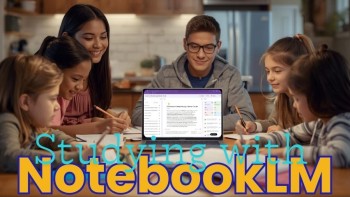
System 2: NotebookLM (AI Study Partner)
  • Generates age-appropriate comprehension questions 
  • Reduces working memory load 
  • Tests: "Is this a question-quality problem or a processing problem?" 
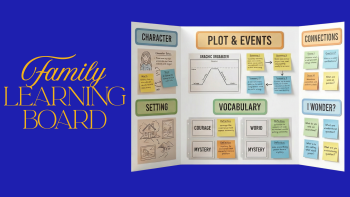
System 3: Family Learning Board
  • Visual progress tracking 
  • Externalizes executive function 
  • Tests: "Is this a motivation problem or an organization problem?" 

After 2 weeks, you'll have STARTING POINTS:

✅ Which system(s) your child engages with most
✅ Initial signs of what might be helping
✅ Specific observations to track going forward
✅ Questions to explore in weeks 3-6

After 2 weeks, you'll have STARTING POINTS:

✅ Is this primarily a DECODING problem? (Need phonics specialist)
✅ Is this screen-reading habits? (Text Mapping is helping consistently)
✅ Is this working memory overload? (NotebookLM support is essential)
✅ Is this executive function? (Visual systems make a clear difference)
✅ Is this motivation? (Dream Builder connection increases engagement)
⚠️ Is this something deeper? (You have 4-6 weeks of data for specialists)

You're not guessing anymore. You're testing systematically and collecting data over time. 

CRITICAL NOTE FOR DYSLEXIC LEARNERS: 
If your child has dyslexia and needs decoding work, you'll STILL benefit from this membership because:
1. Diagnostic clarity shows you what KIND of specialist you need  
2. Text Mapping can be used alongside phonics intervention (they work together)
3. Dream Builder Framework is ESSENTIAL for kids who hear "you can't read" daily
4. Strategic practice themes build systematic thinking even while decoding is being addressed
5. When decoding improves, comprehension systems are ready to go

STEP 2: Start Strategic Practice (Week 2-6)

"Build skills like soccer drills, not busywork" 

You wouldn't expect your child to get better at soccer by just playing games, right? 

They need PRACTICE: 
  • Dribbling drills (isolated skill) 
  • Passing practice (building connections) 
  • Scrimmages (putting it together) 
Reading comprehension works the same way. 

You'll choose a THEME based on: 
  • Your child's interests (animals? inventions? games?) 
  • Your family's schedule (full theme = 4-6 weeks, mini theme = 1-2 weeks) 
  • What they're learning in school (biography unit? Perfect - Inventors theme) 
First Theme Available: Inventors & Innovators 

Why this theme is PERFECT for ADHD/dyslexic learners: 

Your child's brain isn't broken. It's wired for innovation. 

The "normal world" sees: 
  • "Can't focus" → Deficit 
  • "Sees things differently" → Problem 
  • "Questions everything" → Difficult 
Inventors demonstrate: 
  • Hyper-focus on problems → Edison's 10,000 experiments 
  • Pattern recognition → Grace Hopper saw programming patterns 
  • Questioning norms → Carver found 300 uses for a peanut 
Same traits that make school hard make invention NATURAL. 

What You Do (Choose Your Version): 

FULL THEME (4-6 weeks): 
  • Read inventor biographies together 
  • Create text maps showing problem-solving process 
  • Design and build a simple invention 
  • Document learning on Family Learning Board 
MINI THEME (1-2 weeks):
  • Choose ONE inventor matching your child's interest 
  • Create simple text map of their process 
  • Quick prototype or sketch 
  • Celebrate systematic thinking used 
Both build the same core skills. 

You choose based on YOUR bandwidth. 

What This Builds: Immediate (Test Prep):
  • Reading complex text (exactly what's on state tests) 
  • Finding evidence (test strategy) 
  • Making inferences (tested on every assessment) 
  • Navigating dense text on screens (digital test prep) 
Middle School Ready:
  • Tolerance for complex text (middle school textbooks are DENSE) 
  • Systematic note-taking (required for all subjects) 
  • Multi-step project management (every class demands this) 
AI-Era Skills:
  • Noticing novel problems (what AI can't see) 
  • Creative connections (what AI hasn't been trained on) 
  • Persisting through ambiguity (what AI can't handle) 
  • Systematic thinking (essential for AI collaboration) 
Week 1-2: Skills feel clunky (like first soccer practice) 
Week 3-4: Starting to click (muscle memory building) 
Week 5-6: Transferring to other subjects (homework getting easier)

Become Your Child's Dream Builder

"Transform 'I hate reading' into 'This connects to MY dreams'
Adapted from Matthew Kelly's "The Dream Manager" 

Matthew Kelly discovered that employees who saw how daily work connected to their dreams showed dramatic increases in engagement and performance. 

You'll adapt this for your family: You become BOTH:
  • "Transform 'I hate reading' into 'This connects to MY dreams'
  • " Adapted from Matthew Kelly's "The Dream Manager" 
  • Matthew Kelly discovered that employees who saw how daily work connected to their dreams showed dramatic increases in engagement and performance. 
  • You'll adapt this for your family: 
  • You become BOTH: 
Week 1: YOU identify your strategic vision
  • What qualities do I want my child to have by middle school? By 18? 
  • What does "success" mean for THIS child?
  • Which battles are worth fighting? 
Week 2: CHILD identifies their dreams (visually, not verbally) 
Critical for neurodivergent learners who think in images. 

Instead of: "What do you want to be when you grow up?" (overwhelming, abstract) 

Ask: "Show me pictures of things you love" (concrete, visual) 

Use Kelly's 12 Dream Categories: Physical, Emotional, Intellectual, Spiritual, Psychological, Material, Professional, Financial, Creative, Character, Legacy, Adventure
Week 3-4: BUILD THE BRIDGES 
If their dream involves animals:
  • Reading → "Vets decode medical records to save animals" 
  • Math → "Wildlife biologists use math to track endangered populations" 
  • Inventors theme → "Carver invented ways to help farmers AND animals" 
If their dream involves video games:
  • Reading → "Game designers read documentation" 
  • Math → "Use geometry to build 3D worlds" 
  • Inventors theme → "Edison invented technology that led to computers and games" 
When kids see the connection:
  • Resistance decreases (it's a path to THEIR dream, not Mom forcing them) 
  • Intrinsic motivation increases (the only kind that lasts) 
  • Homework gets easier (not less work, but MORE meaning) 

This is the secret to homework peace.

Here's what you get immediately:

✅ Three Diagnostic Systems (Text Mapping, NotebookLM guides, Family Learning Board templates)
✅ First Theme: Inventors & Innovators (Full & Mini versions - start tonight)
✅ Head Coach Framework (Your role redefined - coordinator, not teacher)
✅ Dream Builder Framework (Matthew Kelly's concepts adapted for families)
✅ Survival/Sustainable/Thriving Tiers (Meet you where you are - no overwhelm)
✅ Community Support (Other parents navigating the same challenges)
✅ Access to Future Themes (Choose based on interests and schedule)

What's coming (based on YOUR input):

🔄 Core 8 Comprehension video lessons (February-April)
🔄 Additional themes (members vote on priorities)
🔄 Mini theme library (quick-win versions) 

BETA FOUNDING MEMBER: $19.99/month

  • Only available to first 50 families 
  • Your rate NEVER increases (locked in forever) 
  • Cancel anytime (no contracts, no commitments) 

After 50 families: $29.99/month

  • Save $120/year by joining now 
  • All future content included at your founder rate 

Compare to alternatives:

  • Reading tutor: $200-400/month ($2,400-4,800/year) 
  • ADHD coaching: $150-300/month ($1,800-3,600/year) 
  • Educational therapy: $100-200/hour ($400-800/month) 

Family Learning Adventures: $19.99/month ($239.88/year)

You either: 

1. Solve it at home (save $2,000-4,000+/year)

2. Get diagnostic clarity faster (save months of wrong interventions)

Either way, you win.

30-Day Money-Back Guarantee

Try it for a full month.

Use the diagnostic systems. Start the first theme. Implement the Dream Builder framework.

If you don't see:
  • Clearer understanding of WHERE the breakdown is 
  • Less homework resistance 
  • Your child engaging more with reading 
  • Skills starting to transfer

Just email me within 30 days for a full refund.

  • No hassle. 
  • No questions. 
  • No hard feelings. 
  • I only want founding members who are seeing results. 

What Success Looks Like

After 2 weeks, you'll have INITIAL CLARITY:

Instead of:
  • "Something's wrong but I don't know what" 
  • "Should I get a tutor? A therapist? An evaluation?"
  •  "Every Google search contradicts the last one" 
You'll have:
  • Initial observations to guide next steps 
  • Data points showing what seems to help vs. what doesn't 
  • Questions to ask professionals if you do seek help 
  • Direction instead of paralysis

What 2 weeks of systematic testing shows:

✅ If Text Mapping is helping:
  • "He's slowing down and finding more information in the text" 
  • "She's starting to notice when she doesn't understand" 
  • This suggests: Surface-reading habits may be a primary issue - continue for 4-6 weeks to confirm
✅ If NotebookLM questions are helping:
  • "Better questions get better answers" 
  • "He can answer when I ask this way vs. that way" 
  • This suggests: Working memory or question scaffolding is needed - continue testing
✅ If visual systems are helping:
  • "The board helps her see progress and stay motivated" 
  • "He refers to it without me reminding him" 
  • This suggests: Executive function support is valuable - keep building
✅ If nothing is helping yet:
  • You have 2 weeks of specific data to share with professionals 
  • "We tried Text Mapping for 2 weeks - here's what happened..." 
  • This suggests: May need deeper assessment, but you're not starting from zero

You're not making diagnoses in 2 weeks. You're gathering the FIRST pieces of a puzzle.

In 4-6 weeks, you'll see TRANSFER:

Instead of:  
  • Instead of: Homework battles every single night 
  • Re-reading paragraphs 5 times "I don't know" to every comprehension question
  •  Tears and meltdowns over reading assignments 
You'll see:
  • Homework time cut by 30-50% 
  • Asking themselves questions WHILE reading 
  • Making connections between paragraphs 
  • "Can we keep reading?" (first time EVER) 

Skills built in themes TRANSFER to all school work.

In 3-6 months, you'll see CONFIDENCE:

Instead of:
  • "I hate reading" "This is boring" "I'm stupid" 
  • Avoiding books at all costs 
  • Anxiety about standardized tests 
  • Dread about middle school 
You'll see:
  • "That's like when Edison tried 10,000 times!" 
  • Choosing to read about topics they're curious about 
  • Test scores improving naturally 
  • Ready for middle school text complexity 

Your child isn't "fixed" - they're EQUIPPED.

In 1-2 years, you'll see INDEPENDENCE:

Instead of:
  • You managing every homework assignment 
  • Constant nagging and reminding 
  • "I need help" every 5 minutes 
  • Total dependence on you for academic success 
You'll see:
  • Using text mapping independently 
  • Asking AI better questions (collaborating, not copying) 
  • Tracking their own progress
  •  "I've got this" confidence 

"I've got this" confidence You've moved from homework police to Head Coach.

In 10-15 years (AI era), you'll see COMPETITIVE ADVANTAGE:

Most kids are being trained to: 
  •  Memorize facts (AI does this better) 
  • Follow steps (AI does this better) 
  • Get right answers (AI does this better) 
Your child has been trained to:
  •  Notice novel problems (what AI can't see) 
  • Make creative connections (what AI hasn't been programmed for) 
  • Persist through ambiguity (what AI can't handle) 
  • Think systematically (essential for AI collaboration) 
  • Read deeply in a shallow world (THE differentiator) 

Plus they've learned to use AI as a TOOL (not a crutch).

While other kids say "ChatGPT, write my essay":
  •  Your child says "ChatGPT, help me organize these ideas I've been thinking about" 
  • Your child KNOWS when AI output is wrong or shallow 
  • Your child uses AI to amplify their thinking, not replace it 

This is the competitive advantage that matters.

And here's what YOUR life looks like:

Instead of:
  •  Dreading homework time every night 
  • Feeling guilty about screen time 
  • Googling "ADHD reading help" at 10pm 
  • Arguing with your spouse about whether to get a tutor 
  • Watching the parent-child relationship deteriorate 
 You have:
  •  15-30 minutes of meaningful connection time 
  • Systems that work (no more guessing) 
  • Confidence in your Head Coach role 
  • Money saved ($2,000-4,000+/year if tutoring was avoided) 
  • Your relationship with your child RESTORED 

You're not managing crisis anymore. You're building their future.

What Happens If You Don't Act?

 I'm not going to sugarcoat this.

If you keep doing what you're doing now:

In 6 months: 
  •  The gap widens (middle school text complexity is REAL) 
  • Homework battles intensify (they're not getting easier) 
  • Your child's self-concept suffers ("I'm just not a reader" becomes "I'm stupid") 
  • Standardized test anxiety increases 
  • You've spent hundreds on strategies that didn't work 
In 1-2 years (middle school):
  •  They hit the wall HARD (textbooks in EVERY subject require deep reading) 
  • Teachers expect independence (no more hand-holding) 
  • Multiple texts to synthesize (screen-reading habits catastrophic here) 
  • You're looking at expensive interventions (now it's crisis mode, not prevention) 
  • Many kids start to give up entirely 
In 5-10 years (high school and beyond):
  • Many kids start to give up entirely 
  • "I hate reading" becomes permanent identity 
  • College prep = panic (SAT reading comprehension requires deep thinking) 
  • Career options limited (most jobs require reading complex information) 
  • They never learned to read DEEPLY (surface-reading is all they know) 
In 15-20 years (AI era):
  • Jobs requiring surface-level work are automated 
  • Your child competes with AI for tasks they were trained to do 
  • They never developed the systematic thinking that can't be automated 
  • The competitive advantages you COULD have built? Never happened. 

And here's the painful truth:

The longer you wait, the harder it gets to fix.


 Elementary school: Brain is plastic, habits are forming (THIS is the window)

Middle school: Possible but requires more intensive intervention

High school: Most kids have given up, patterns are entrenched

You're at the EXACT RIGHT MOMENT to intervene.

But that window is closing.

In 15-20 years (AI era):
  • Jobs requiring surface-level work are automated 
  • Your child competes with AI for tasks they were trained to do 
  • They never developed the systematic thinking that can't be automated 
  • The competitive advantages you COULD have built? Never happened. 

And if you guess wrong about tutoring/therapy/evaluation?

Scenario 1: You hire a reading tutor ($2,400-4,800/year) 
  • It's actually a screen-reading habits problem (not a reading disability) 
  • Tutoring helps a little (more practice always helps) 
  • But doesn't retrain the UNDERLYING surface-reading pattern 
  • You've spent thousands on the wrong intervention 
Scenario 2: You do nothing (afraid of making the wrong choice)
  • Paralyzed by indecision ("Should I? Shouldn't I?") 
  • Meanwhile the gap widens 
  • By the time you act, it's crisis mode 
  • Now you NEED expensive interventions (prevention window missed) 
Scenario 3: You keep Googling strategies
  • Pinterest activities that don't transfer to school 
  • Conflicting advice ("Use rewards!" 
  • "No, rewards kill intrinsic motivation!") 
  • Overwhelmed by options (analysis paralysis) 
  • Nothing systematic enough to create lasting change 

None of these scenarios get you what you actually need:

DIAGNOSTIC CLARITY + SYSTEMATIC PRACTICE + SKILLS THAT TRANSFER 

And here's what breaks my heart:

 I've seen this pattern hundreds of times in 25 years:

Bright, creative, capable kids who:
  • Start to hate reading by 4th grade 
  • Develop "I'm stupid" self-concept by 6th grade 
  • Give up on school by 8th grade 
  • Drop out or barely graduate high school 
  • Spend their adult lives believing they "can't learn" 

When the truth is:

They never had screen-reading habits retrained.
They never got systematic practice in deep reading.
They never had systems that worked WITH their neurodivergent brain.
They didn't need fixing.
They needed what you're looking at right now.

Don't let your child become another statistic.
This is preventable.
But only if you act NOW.

Frequently Asked Questions
 
Q: How is this different from tutoring?  
Tutoring:
Works on specific skills (phonics, sight words, test prep)
One-on-one instruction (expensive: $200-400/month)
Focuses on content mastery
You still don't know WHERE the breakdown is

Family Learning Adventures:
DIAGNOSTIC first (shows you where the breakdown actually is)
Systematic practice (like soccer drills, builds skills over time)
Works WITH neurodivergent brains (not against them)
Skills TRANSFER to all subjects $19.99/month (founder pricing)

Plus: If you DO need a tutor later, you'll know EXACTLY what kind and have DATA to show them.

Q: My child already has a tutor. Would this still help?

Yes! This COMPLEMENTS tutoring in three ways:

1. Diagnostic clarity: You'll understand what's working in tutoring and what isn't
2. Strategic practice: Reinforces skills between tutoring sessions
3. Transfer skills: Helps skills learned in tutoring transfer to school work

Many parents use tutoring for specific skill gaps (phonics, writing) while using our systems for comprehension and systematic thinking.


Q: How much time does this take per week? 

You choose based on YOUR bandwidth:

Survival Mode: 15 min/day (mini themes, basic systems)
Sustainable Mode: 20-30 min/day (full themes, all three systems)
Thriving Mode: 30-45 min/day (everything + Dream Builder deep dives)

The design: 
Week 1-2: 30-45 min setting up systems
Week 3+: 15-25 min daily practice
As skills build and transfer, homework across all subjects should become more efficient

The goal: 
LESS total time on homework overall as systematic thinking skills develop.

Founding member advantage: Your feedback on time investment will help us optimize for busy families.

Q: What if my child resists "one more thing"? 

This is designed to REDUCE resistance, not add to it.

Here's how: 
1. Themes match THEIR interests (animals? games? inventions? you choose)
2. Dream Builder connects to THEIR goals (not your demands)
3, Feels like exploration (not more homework)
4. Success builds quickly (competence creates motivation)

The goal: 
Activities are interesting (not worksheets)
They see progress (Family Learning Board shows it)
It connects to their dreams (intrinsic motivation)

Plus: You can start with a MINI theme (1-2 weeks) to build buy-in before committing to full themes.

Full transparency: You're founding members, so we're learning together what works best to reduce resistance. Your feedback will help us refine the approach for future families.

Q: What if we're too busy right now? 

Perfect time to join as founding member:
1. Lock in $19.99 pricing (it's going up to $29.99 after 50 families)
2. Access stays active (use it when your schedule opens up) Start with Survival Mode (15 min/day)
3. Use mini themes (1-2 weeks instead of 4-6)

4. Most families are "too busy" because:
 Homework takes 1-3 hours every night (battles + actual work)
Googling strategies at 10pm
Worrying about whether to get evaluations/tutors

This actually SAVES time by: 
Reducing homework battles (less conflict time)
Giving you clear systems (no more late-night Googling)
Providing diagnostic clarity (no more decision paralysis) Y
ou're busy BECAUSE you don't have systems. Systems create time.

Q: My child has dyslexia. Will this help or do they need specialized intervention? 

Both can be true:

If dyslexia is DECODING-based (can't sound out words):
Yes, they need specialized phonics intervention (Orton-Gillingham, Wilson, etc.)
Text Mapping will show this ISN'T the primary issue
You'll have data to get the RIGHT intervention

If dyslexia is COMPREHENSION-based (can decode but doesn't understand):
Text Mapping often helps SIGNIFICANTLY (makes comprehension visible)
NotebookLM reduces working memory load (common dyslexic challenge)
Strategic practice builds skills that transfer
You may avoid needing expensive intervention

Many dyslexic learners need BOTH: 
Specialized decoding instruction (from specialist)
Comprehension and systematic thinking practice (this membership)

Plus: The Dream Builder Framework is CRITICAL for dyslexic learners who often hear "you can't" and develop negative self-concept.

Connecting schoolwork to THEIR dreams transforms "I'm stupid at reading" into "Reading is a tool for MY goals."

Q: What if I'm not "teacher-y" enough to do this? 

You don't need to be.
You're not the teacher.
You're the HEAD COACH.

Teachers: 
Deliver content instruction
Need teaching credentials
Work with 25 kids simultaneously

Head Coaches (YOU): 
Coordinate systems
Observe and collect data
 Connect specialists when needed
Build for 18 years, not just one quarter

Everything is DONE-FOR-YOU: 
NotebookLM generates questions (AI does the work)
Text Mapping templates provided (fill-in-the-blank)
Family Learning Board is visual (no explanation needed)
Theme activities have step-by-step guides

You're not teaching phonics or explaining grammar. You're using professional-grade systems I've already built.

Q: How do I know if the problem is screen-reading vs. something deeper? 
That's exactly what the diagnostic systems show you in 2-4 weeks:
 
Use Text Mapping for 2 weeks:
 If comprehension IMPROVES:
Problem = surface reading habits
Solution = keep using Text Mapping
You just saved $2,400-4,800 in tutoring

If comprehension DOESN'T improve: 
Problem might be deeper (decoding, processing, working memory)
You have SPECIFIC data to show specialists
You didn't waste months guessing

Then test NotebookLM: 
If better questions HELP:
Problem = question quality or working memory
Solution = keep using AI scaffolding
You may need accommodations (but not therapy)

If better questions DON'T help: 
Problem might be processing or deeper language issue
You have data for SLP or educational psychologist
You're systematically ruling things IN or OUT.
This is how professionals diagnose. Now you have similar tools.

Q: What if we try this and it doesn't work for our child? 


30-Day Money-Back Guarantee. 
Use it for a full month. Try the systems. Start a theme.

 If you don't see clearer understanding of what's going on within the first 30 days, email  me for a refund.

But here's what I've seen in 25 years: 

The systems "don't work" when: 
You don't actually implement them (can't help with that)
You implement inconsistently (2 weeks on, 2 weeks off - skills don't build)
You expect overnight transformation (this is practice, like soccer drills)

The systems DO work when: 
You commit to 2-4 weeks of consistent practice
You start with ONE system (not all three at once)
You celebrate small wins (Week 1: noticed a pattern! Week 2: asked a question!)
You use it AS DESIGNED (not trying to perfect it or make it different)

AND - even if the systems don't solve the problem entirely: 
You'll have DIAGNOSTIC DATA that's worth more than the membership cost.

Knowing "Text Mapping didn't help" tells you:
This ISN'T just surface-reading habits
Investigate decoding OR deeper processing
Get evaluation focused on X, not generic testing

That clarity alone saves you months of wrong interventions.

Q: Can I cancel anytime? 

Yes. No contracts. No commitments.

Cancel in your account dashboard anytime.

But here's the thing: Founder pricing ($19.99) locks in ONLY while you stay active.

If you: 
Cancel and come back later
You rejoin at current pricing (probably $29.99 or higher)

Why the locked-in rate matters:
 
$19.99/month is less than ONE tutoring session
Skills keep building (it's not a one-time fix)
New themes keep launching (more practice opportunities)
Community support develops (you're not alone)
The best value you'll ever lock in.

This Is Your Moment

You've been stuck for months (maybe years) trying to figure out:
  • WHERE the breakdown is
  •  WHAT to do about it 
  • WHO to trust with solutions 

You've tried Googling. You've tried "focus harder" conversations. You've considered tutoring (but worried about the cost).

Nothing has given you what you actually need:
CLARITY about what's actually wrong.
SYSTEMS that work with your child's brain.
STRATEGIC PRACTICE that builds transferable skills.

Family Learning Adventures gives you all three. For less than ONE tutoring session per month.

The Window Is Closing

 Founding Member Pricing: $19.99/month Only available to first 50 families After 50 families join: 
Price increases to $29.99/month ($120/year more)
You lose the ability to lock in founder pricing forever
Future members pay more for the SAME content you're getting now

Once we hit 50, this price is gone forever. 

Here's What Happens Next

When you click the button below: 

1. Secure your spot (join first 50 founding members) 
2. Lock in $19.99/month forever (price never increases for you) 
3. Get immediate access (start tonight) Download first theme (Inventors & Innovators) 
4. Set up diagnostic systems (Text Mapping, NotebookLM, 
5. Family Learning Board)
6. Join community (other parents navigating same challenges)

Within 48 hours:

  • You'll have your first text mapping session done 
  • You'll see how NotebookLM generates questions 
  • You'll start the Family Learning Board 
  • Your child will engage with content that connects to THEIR interests 

Within 2 weeks:

  • You'll have initial observations (starting to see patterns) 
  • You'll know which system your child engages with most 
  • You'll have data points to guide next steps 

Within 4-6 weeks:

  • You'll have diagnostic clarity (patterns established over time) 
  • You'll see if skills are transferring to school work 
  • You'll feel confident in your Head Coach role 

Within 3-6 months:

  • Your child will have built systematic thinking habits
  •  You'll have clear data on what helps (and what doesn't) 
  • You'll know if you've saved tutoring costs OR need to seek specialists 

Two Paths From Here

PATH 1: You Join as Founding Member

  • Lock in $19.99/month forever 
  • Get diagnostic clarity in 2-4 weeks 
  • Build systematic thinking skills through strategic practice 
  • Potentially save $2,000-4,000+ in tutoring (if home strategies work) 
  • OR get to right specialist faster (if deeper intervention needed) 
  • Prepare your child for middle school text complexity Build AI-era competitive advantages
  •  Restore your parent-child relationship 

PATH 2: You Keep Doing What You're Doing

  • Keep Googling strategies at 10pm 
  • Keep wondering "Do I need a tutor?" 
  • Keep watching homework battles destroy your relationship 
  • Keep worrying about middle school 
  • Watch the gap widen 
  • Spend thousands on interventions that may not address root cause 
  • Miss the prevention window (it gets much harder after elementary school) 

You Get to Choose

But you can only choose Path 1 RIGHT NOW if you're in the first 50 families.

After that?
Founding member pricing is gone forever.

Don't wait.

Your child needs this. You need this. The window is closing. 

30-Day Money-Back Guarantee Try it risk-free for a full month

P.S. - Still Have Questions?
 
"What if my child is in [grade]?" 
Works for grades 2-8. Themes scale to interest and reading level. 

"What if we already tried [other program]?" 
This is diagnostic-first. You'll understand WHY other programs didn't work. 

"What if we're really overwhelmed right now?" 
Start with Survival Mode (15 min/day you can even do just a few days a week) and mini themes. This REDUCES overwhelm, not adds to it.
 
"What if I need to talk to my spouse first?"  
I always recommend consulting your spouse or coparent. Just remember: Founding member pricing is available ONLY to first 50 families. If you wait and we hit 50, you'll pay $120/year more. Lock in pricing now, cancel within 30 days if needed.

"What if my child has [specific diagnosis]?" 
ADHD, dyslexia, autism, anxiety - all benefit from diagnostic clarity + systems + strategic practice. The framework adapts to your child. 

"What if I just need someone to tell me what to do?" Perfect. Every theme has step-by-step guides. Every system has templates. You're not designing this - you're implementing what's already built. 

Still not sure?
Email me: ksutherland@learninginadistractedworld.com
I'd rather answer your question than have you miss this opportunity. 

Join the first 50 families.
Lock in $19.99/month forever.
Start building your child's future tonight.

Spots remaining: 50 of 50

Kelly Sutherland

Why I'm Doing This

I'm Kelly Sutherland - National Board Certified Teacher, Reading Specialist, Academic Language Therapist in training. 25+ years in classrooms.
Living with ADHD.  I have child with dyslexia. I know what works.
And I'm building this WITH you, not FOR you.
50 families who believe in this vision before it even exists.
50 families who want the lowest rate possible.
50 families who will help shape what this becomes.
Are you one of them? 

Course Pricing

Regular Pricing

$19.99 USD

$19.99 USD /month after trial

  • Regular Pricing Plan

Buy Now